Summary
Within video games, haptic feedback refers to technology that adds an element of touch or haptics to the experience. This can be achieved through the use of controller vibrations and rumble, or adaptive triggers, which can greatly change the way that interacting with a controller’s triggers feels physically for the player.
Haptic feedback can add a viscerally immersive experienceto a game, allowing players to not only see, hear, and control what happens on their screen, but to really feel it too. Even better, it can be used in various games, from somber cinematic experiences to more lighthearted adventure romps.
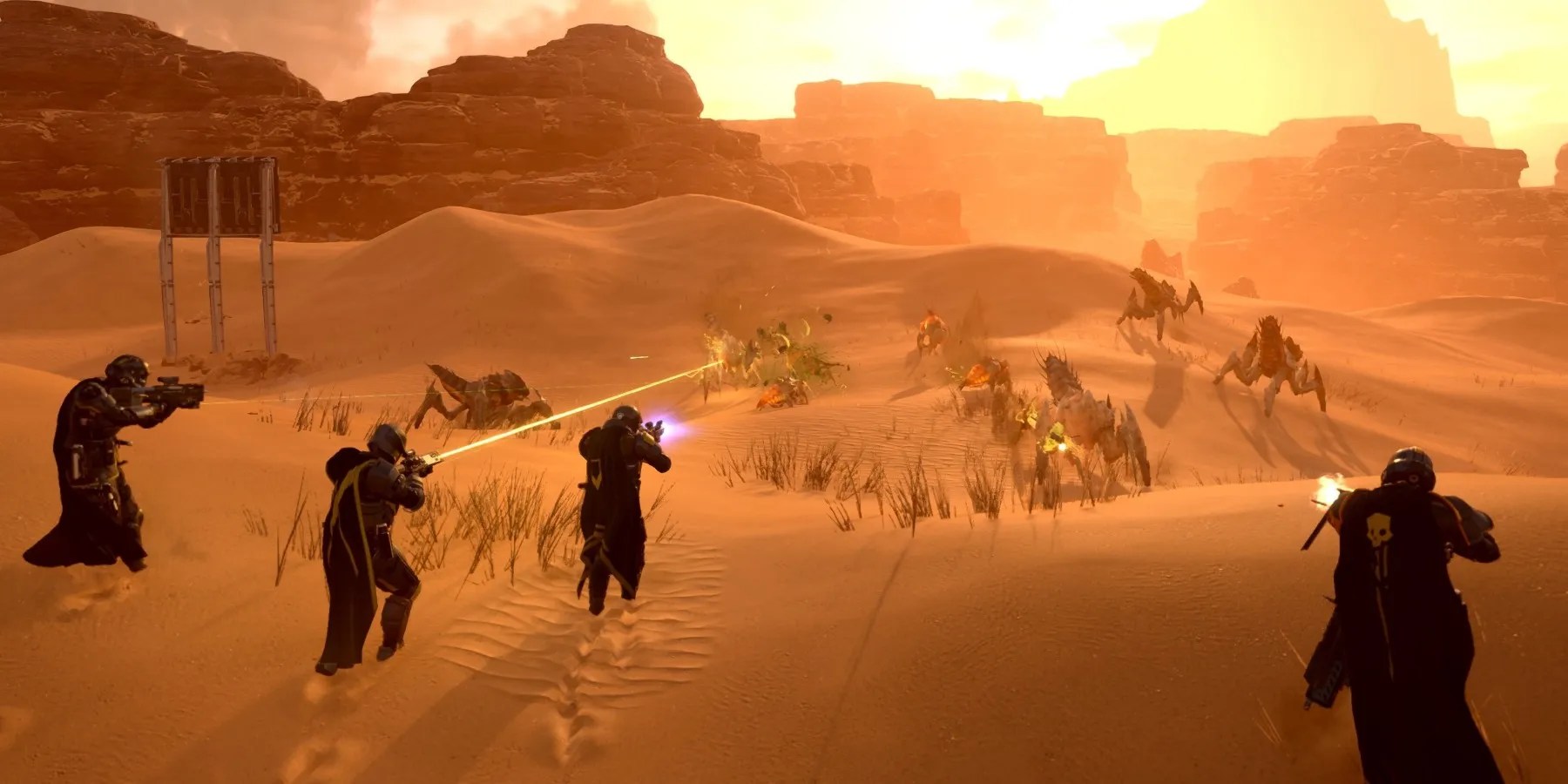
Updated August 01, 2025, by Nyah Payne:Haptics continue to play a pivotal part in immersing players within their game, especially regarding the PlayStation DualSense controllers. As newcomers on the block, Helldivers 2 has become a huge success, being enjoyed by many fans laying down their lives for the freedom of Super Earth. Helldivers 2 also uses the DualSense controller, and the haptic feedback enabled by it, to add to the game’s thrill factor.
The latest game to bring joy to countless players,Helldivers 2is already enjoyed by many, with content being shared on YouTube, Twitch, and TikTok constantly. The co-op sci-fi shooter sees players battling against alien threats to the glorious and democratic way of life on Super Earth.

Helldivers 2manages to balance a comedic and entertaining tone with some quite gritty gameplay, and the haptics utilizedon the DualSense controller only add to this feeling. The adaptive triggers, in particular, really hone in on the visceral feeling of shooting with the various weapons available to players.
This exclusive co-op action-adventure game uses haptic feedback sparingly. But it acts as a great example that very specific use of haptics can be just as effective as frequent use. While most ofA Way Outis set up as a lighthearted buddy adventure, it takes a dramatic turn at the end.

An act of betrayal leads the two player characters to turn on each other in a heart-wrenching fight to the death, all carried out by the two players. Only one player and character can come out on top, with the other taking a fatal shot from their friend. As the character bleeds out and the pair share one last moment, the player of the dying character feels the gradually slowing heartbeat of their character through the controller’s vibration.
WhileA Way Outhas a singular moment to demonstrate the effective use of haptics,Cyberpunk 2077has a particular mechanic that shines through haptic feedback.Players navigating Night Cityare unlikely to explore it all on foot. Taking to the roads on cars or bikes is a big part of the game, with car chases being prevalent in some missions, including the opening for nomads.

From the moment players start the game, driving is established as a core mechanic, and the experience is greatly enhanced through adaptive triggers. Acceleration is felt through the gradual easing of tension from the triggers, and players even feel the individual gear changes through resistance in the triggers.
The sequel to the beloved game,Horizon Zero Dawn,Forbidden Westaims to improve upon the experience in multiple ways, one of which is haptic feedback. Another game with a strong mechanic to demonstrate its effectiveness,Forbidden West’shaptics can be felt most satisfyingly through archery.

Players can accessmany weapons throughHorizon Forbidden West, but the protagonist, Aloy, is particularly proficient with and recognizable for her archery. Players aim the bow through adaptive triggers, allowing players to feel the weight of their draw, and the release of tension when they fire, as if firing a real bow.
The Kojima epic,Death Stranding, starts to include more frequent use of haptics, paired wonderfully with its narrative.Death Strandingcenters around Sam Bridges, who spends most of his time making almost comically large deliveries hauled around on his back through an unusual post-apocalyptic Icelandic-looking environment.

Oftentimes, Sam must battle the elements, from high winds to deadly rain, fields of mud and snow, rushing rivers, and even just the treacherous landscape. Controller rumble helps to enhance this feeling, as well as warning when Sam is at risk of toppling and losing his delivery.
Combat is a huge part of a lot of video games, so it is no surprise that plenty of games have used haptic feedback to enhance the feeling of their combat. It can be one of the most effective uses for it in combat-heavy games.

The samurai game,Ghost of Tsushima,is a great example of this. Whether it’s utility abilities like a grappling hook, ranged attacks with bows, or the prolific slashing of swords characteristic of samurai combat, players get to feel every sword clash.
As a FromSoftwareSoulsgame,Demon’s Soulsis another game where combat is a core part of the gameplay and overall identity. But the combat in theDemon’s Soulsremake has particularly satisfying haptic feedback to accompany a player’s every move.In aSoulsgame, this is particularly important for making victory feel physically satisfying and helping players time their moves to perfection.

There is a good reason why its use of haptics is particularly prominent. The remake was released alongside the PS5, practically ensuring that the remake would want to make the most of and showcase the haptic capabilities of the new hardware.
Returnalis another game that was released around the launch of the PS5. As a new intellectual property as opposed to a remake, though, it was as ifthe roguelike could be designed specifically with the new hardware in mind. Both adaptive triggers and controller vibrations are used to produce an incredible effect.

While players can turn the feature off, players have an ability that is performed by releasing the trigger at a specific point, rather than pulling it all the way back as is typical for combat abilities in most games. On top of this, many players cherish the moment towards the beginning of the game, where it is raining and players feel each drop of rain through vibrations in the controller.
While most entries areepic narrative experiencesor visceral combat games, the indie game,Stray, proves that haptic feedback works just as beautifully for quiet moments and simulating unusual experiences.Straysees players controlling a lost cat in a post-apocalyptic, almost cyberpunk, world. Despite being sparing,Stray’suse of haptics is so effective at conveying a very specific experience - that of being a cat.

The controller will rumble when the cat is purring, allowing players to feel the comforting noise. Adaptive triggers will tense up when players scratch certain objects, like doors or furniture, mimicking the satisfying resistance felt as a cat drags its claws through the material. It’s a wonderfully unique sensory experience and one of the few examples of “less is more” for haptic feedback.
Back to the large-scale games and the very frequent use of haptic feedback with theGod Of Warsequel,Ragnarok. The beauty ofRagnarok’shaptic feedback comes from its subtlety and its frequency.Combat is a large part of theGod Of Warfranchise(unsurprisingly, given the name), and the combat does admittedly have amazing feedback, with each swing of the axe feeling powerful through tension in the adaptive triggers.
But almost every moment in cutscenes and exploration has a controller rumble to accompany it. Every object that Kratos touches, every physical interaction with Atreus, even sliding down a rope, which feels particularly satisfying, is complemented by a physical response from the controller. It works to establish the immense power behind the God of War’s every movement.
