The world map. Whatever happened to that design choice in RPGs? Players used to be able to leave a city or dungeon and then have the opportunity to explore an open space that was filled with monsters, treasures, and secrets. AAA RPGs either come in two flavors now.
Theycan be open-worldwhich feels like the evolution of the world map mechanic. Then there are more linear progression systems without a true “world” to explore. There are certainly a lot of in-between modern examples to go through too, but let’s instead rewind the clock to the PS1. This might have been the last best console that used the world map system, giving RPGs some early open-world moments.

Chrono Crosstechnically has open-world sections although the game is smaller in scope to RPGs likeFinal Fantasy 7. The world was flat and players didn’t have a lot of options in-between towns and dungeons at first. However, the acquisition of a boat opened things up eventually.
Also, unlike the firstgame ofChrono Triggerwhich featured time travel,Chrono Crossfeatured inter-dimensional travel. So, it could be considered to be the world’s first open-dimensional RPG. Overall, it may not have been the sequel fans were expecting, butChrono Crosswas and still is a solid RPG on PS1.

Final Fantasy 7has to be one of the most celebrated RPGs of all time besides just being a fun PS1 game. That feeling of leaving Midgar and experiencing the world map for the first time was mesmerizing. Even at that point, there was a lot to do like catching and training Chocobos. As the game progressed, more and more modes of travel were unlocked like the buggy, airplane, and airship.
It felt like a giant world at the time which of course is small by today’s standards. A hundredFinal Fantasy 7games could probably fit insideGrand Theft Auto 6if not a thousand. Still, it’s a great RPG that truly opened things up for all RPGs that followed.

Star Ocean: The Second Storyis getting a great resurgence in love this year thanks to the remake in HD-2D. Remakes aside, the game follows a space explorer, Claude, who lands on a strange planet inhabited by humanoids who are more magic-based than science-based. The clashing of worlds leads Claude and others to stop an evil from overtaking the planet.
It’s a typical RPG plot but one that is backed by a cast of good characters. The action combat, skill system, and exploration didn’t hurt either. Players are in for a good time whether they experience this game natively on PS1 or via the modern remake.

4Suikoden 2
Metacritic Score: 82
Suikoden 2looked datedat the time as it chose to use sprites instead of polygonal models. It may not have been groundbreaking graphically at the time, but the aesthetic choice has helped it stand the test of time. Suikoden 2 and the rest of the series are unique as RPGs because they all revolve around recruiting over a hundred characters.
While a lot could be used in battle, forSuikoden 2’scase, it was more about fortifying the rebel HQ with NPCs like cooks and shopkeepers. It truly felt like building a resistance from the ground up, unlike other RPGs at the time which featured rebellious storylines. This meant that there was a big world to explore and players could recruit as many or as little as they wanted.

3Valkyrie Profile
Metacritic Score: 81
Valkyrie Profileisan Enix game, or at least it was purely Enix before the merger with Squaresoft. Combat is turn-based and all characters have set moves in a unique formation with combos to master. The story takes place during the Ragnarok and players only have a set amount of time to recruit allies before everything ends.
This ticking time clock may stress some players out or it might motivate others. The feeling is a lot like the time loop dilemma inThe Legend of Zelda: Majora’s Maskexcept Valkyrie Profile doesn’t have a creepy moon. It opens the doors for replay value that’s for sure.

2Wild Arms 2
Metacritic Score: N/A
Wild Arms 2allowed players to begin the game as one of three characters: Ashley, Brad, or Lilka. The choices didn’t affect the story as all three would meet up eventually along with many other companions. What made this series unique at the time was the puzzle-based dungeons.
Characters had unique abilities and items that allowed them to manipulate the world. Combat was handled more or less like most turn-based games at the time though except for the heavy emphasis on guns. Also, there was a big open world to explore outside of towns and dungeons.
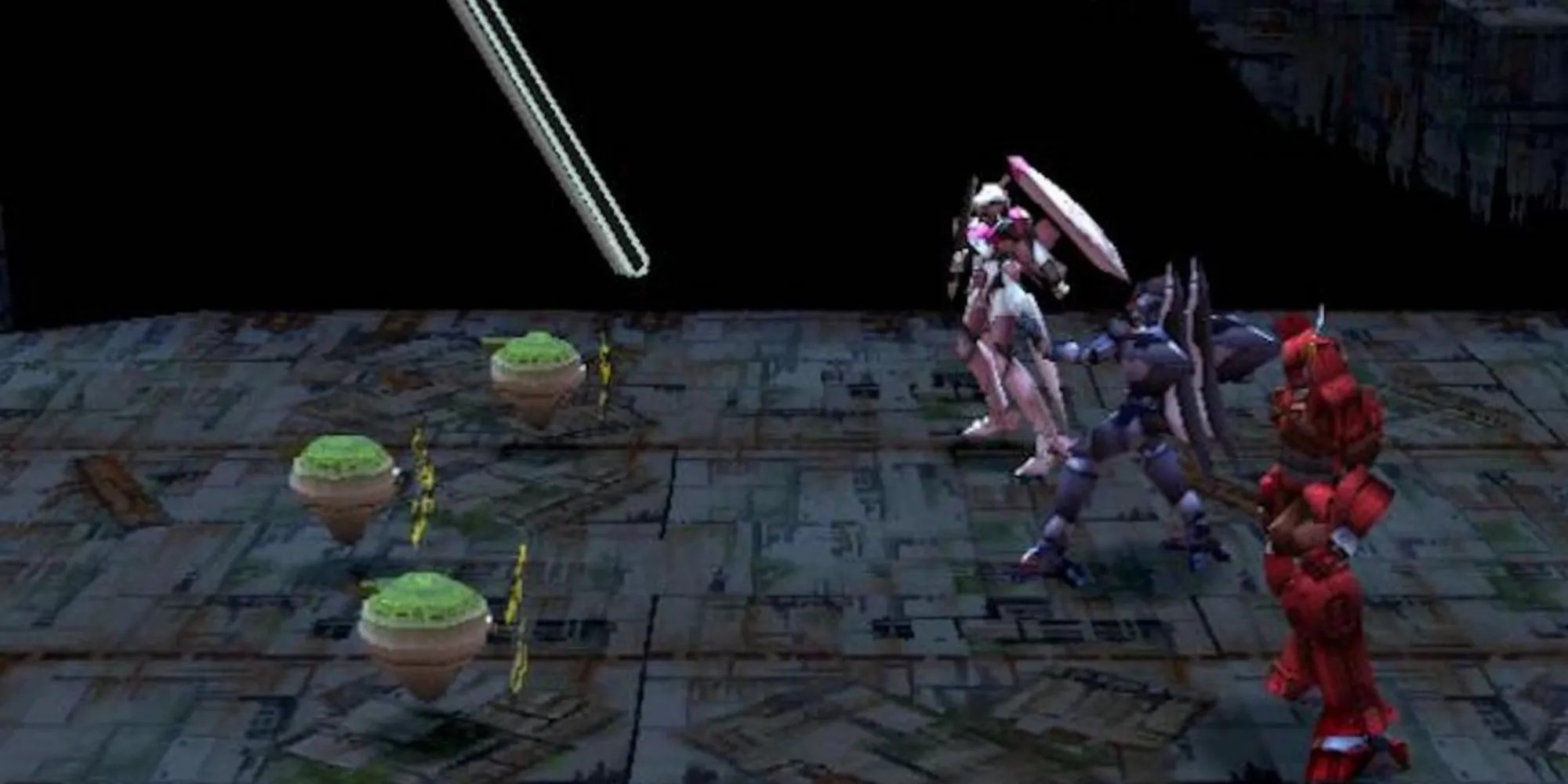
Fans of theXenobladeseries on Switch can trace the roots of that series back to Xenogears. The two franchises share a lot of the heavy anime influences although religion plays a huge role inXenogearsas it did with many 90s RPGs. It was a turn-based RPG that used a combo system for attacks, sort of like a fighting game.
Eventually, players could get into mechs as well in battle and even these robots could do combos. The mechs could be used to explore new regions of the world map as well which was a cool feeling especially for Square Enix, Squaresoft at the time, fans who were used to airships in most of their RPGs.
