The creativity and freedom players are given inThe Legend of Zelda: Tears of the Kingdomis unlike many games out at the moment, emphasizing players to use the tools given in inventive ways beyond what the developers expected. This is a surface-level descriptor ofZelda: Tears of the Kingdom, but it sounds incredibly similar to Arkane Austin’sPreyfrom 2017 as that title also allows players the flexibility to tackle situations in ways the game allows while likely being beyond what developers envisioned.
Preyis classified as an immersive sim, andZelda:Tears of the Kingdomis not. A big reason for this is that the latter game is missing a few staples often associated with the genre. Some examples are that options inZelda:Tears of the Kingdomcan occasionally be limited, such as no method around locked doors without the key and most friendly NPCs not having any extensive interactions beyond giving quests. Where the comparisons truly lie betweenZelda:Tears and the Kingdomand games bearing the immersive sim moniker is in how players can interact with the world at large and how objectives are tackled.
RELATED:Comparing How Elden Ring and Zelda: Tears of the Kingdom Present Their Lore
Zelda: Tears of the Kingdom Has The Philosophy of an Immersive Sim
A defining trait of many immersive sims is the freedom players have to interact with the world in unpredictable ways that the world responds to naturally, and much ofZelda:Tears of the Kingdom’s popularity beyond its brand name stems from this very trait.Zelda: Tears of the Kingdomis popular for Korok torture, but there is a staggering number of ways a player can accomplish the intended goal of reuniting one separated from their friend.
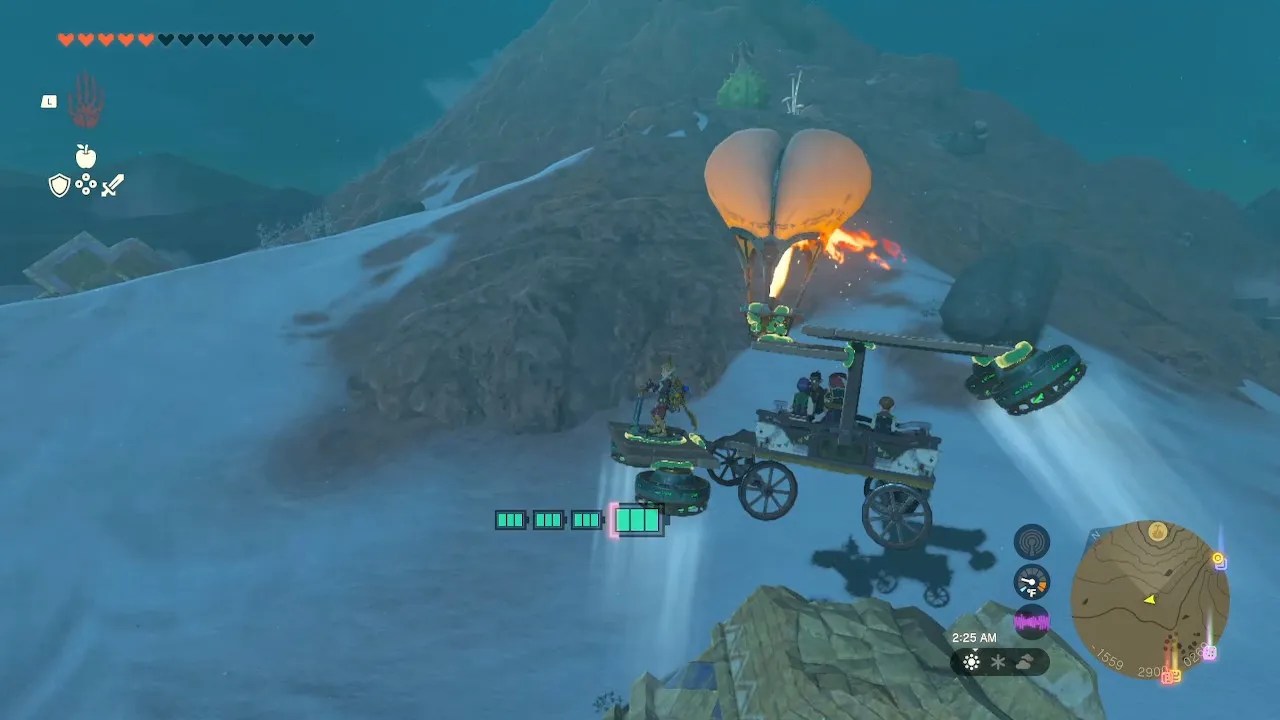
The suggested tools are typically nearby, but by no means have to be used. With any number of Koroks, players build terrain or aerial vehicles, pick them up, or strap them to a rocket. The game does not care what methods the player uses if the objective is completed. Enemy interactions are also comparable togames with immersive sim elements, as most encounters have several variables dependent on the player’s surroundings and the resources available.

Taking the example of reaching a shrine surrounded by enemies, methods can range from more standard tactics like dispatching foes from afar using a bow or charging in for a fight, but where the real enjoyment from the game stems from more inventive methods, such as infiltrating a camp with a goofy disguise, flying over all the foes to circumvent fighting them at all orcharging inside a bomber planethat devastates all.
It harkens to a main mission inDeus Exwhere the objective is infiltrating a pharmaceutical office in Hong Kong, and one way players can succeed is by using brute force, but more engaging methods involve bribing a manager to allow the player access to a large chunk of the level without raising suspicion or sneaking in unsuspected if protagonist JC’s augmentations cater towards pure stealth.
An arguable deviation from many immersive sims is Link having the same abilities across any playthrough because titles likePreyhave build variations that fundamentally change how the player interacts with the world, notably the security turn hostile if players lean heavily into Typhon powers. Much of the same can be said for many of the152 shrines found throughoutZelda:Tears of the Kingdom.
While some might only be able to be completed in the ways the developers intended, most can take any number of absurd directions that are doable. One shrine might intend for players to build a makeshift cart that stays locked on a strangely designed track, and the only thing that matters is reaching the end.
Players can ignore making the cart in favor of fusing the provided fans, creating a lifting platform that allows players to glide safely to the goal. Objects and situations are different, but this problem-solving mentality is similar to stacking crates on top of each other to get somewhere normally inaccessible or difficult to reach, something common enough in immersive sims that it is a bit of a running joke regarding games likeDeus Exand its many boxes to stack, along with continuing the0451 reference many immersive sims have usedsinceSystem Shock.
RELATED:Arkane Studios is Leaving Money on the Table Without a Prey 2
The Term Immersive Sim is Somewhat Nebulous
Most fans won’t deny that titles such asThiefandDishonoredare immersive simssince they allow players much flexibility with objectives and allow interactions affecting the characters and environments they inhabit. Other games likeBioShockare also comparable to immersive sims but have more limited interactions with environments.Zelda: Tears of the Kingdomsits in the middle of those games, giving options comparable to titles carrying the immersive sim moniker, but at the same time being more restrictive when it comes to specific elements like in-depth engagements with non-hostile NPCs or having puzzles with no flexibility.
If the only barrier to clear to be called an immersive sim is to have emergent gameplay with a dynamically reacting world, thenZelda:Tears of the Kingdomcan arguably be called one. The number of options connecting players to the world through combat, puzzle-solving, and traversal is staggering. Except forgames likeDeus Ex,System Shock 2,andPrey, it’s difficult to find games whose worlds have as many dynamic reactions to player actions asZelda:Tears of the Kingdom.
Once more rules for what makes an immersive sim are stacked on top of each other, the game begins to deviate. But that causes a slippery slope of where to draw a line. If a lack of build variety excludes it,Thiefwould not be an immersive sim, and if a third-person camera excludes it, thenWeird Westwould also not be classified as one. Although many might not refer to it as an immersive sim,Zelda:Tears of the Kingdomdoes a wonderful job translating many elements of one into a dynamic open world, making it at least fair to bring it up in some discussions.
The Legend of Zelda: Tears of the Kingdomis out now for Nintendo Switch.
MORE:Zelda: Tears of the Kingdom’s Master Sword Quest is the Best it’s Been Since Link to the Past
