One of the key aspectsMs. Marvelproducers, directors, writers, and the show’s audience have been keen to highlight is how the show tackles Muslim representation, however, beyond the cultural nuances that make Kamala Khan such a unique hero, how society starts to see this newMCUmember also defines a lot about the series, just like it did forThe Falcon and the Winter Soldier.
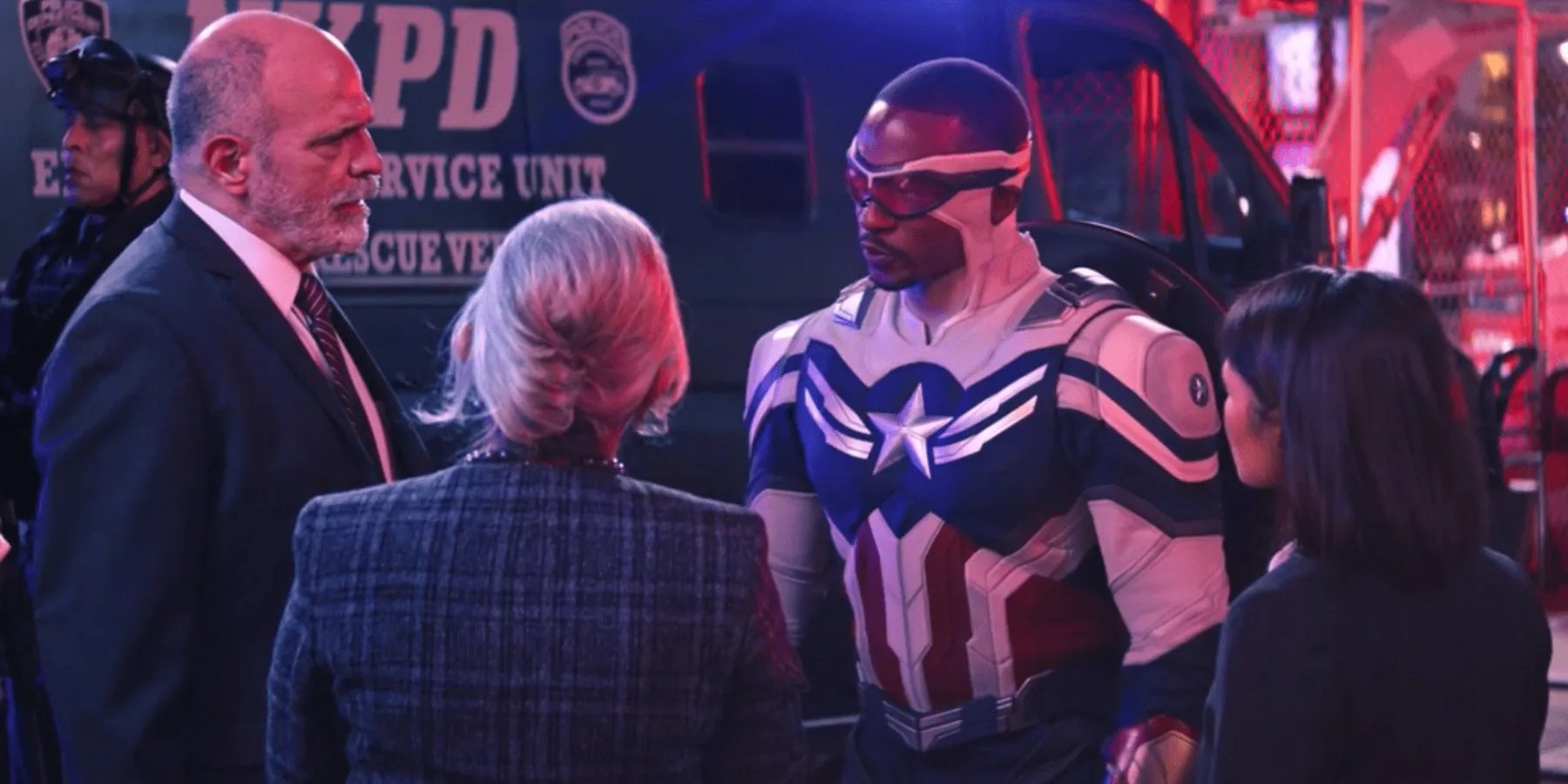
It goes without saying thatFalcon and the Winter Soldier’sthemes expand well beyond this, as the series’ other focus is the severe toll post-traumatic stress disorder takes on both human and superhuman heroes, yet Sam Wilson’s journey is really where it perfectly intersects withMs. Marvel. Sam struggles to pick up the Captain America mantle not only due to the burden of succeeding Steve Rogers, but also because of decades-old prejudice that Kamala too will probably encounter.

RELATED:Why Square Enix’s Avengers Project Seemingly Fizzled Out
Marvel’s Law Enforcement
One of the most iconic moments through the entirety ofTFATWScomes when Bucky and Sam encounter the police and the latter Avenger is asked for his ID, although the situation doesn’t scale much further, it perfectly represents how differently the police see the Falcon and Winter Soldier, mainly because of their skin color. This is just one of many scenes created to highlight Sam’s clashes with institutions that have discriminated against people of color (such as banks), not even necessarily due to individuals carrying out their jobs, but down to their core design, philosophy and long-standing practices.
InMs. Marvel’scase, the United States Department of Damage Control has been picked to fulfill this role, because the federal institution is put at the forefront since the first episode one as one of Kamala’s potential antagonists. While the Clandestine djinns may have been revealed as the true villains, the series also shows a stark difference between the way the DODC clamps down on Spider-Man inNo Way Homevs. the friendly neighborhood Muslim girl that is “Night Light”.

When Zoe Zimmer is first questioned by agents Cleary and Deever, the DODC puts its best racial profiling practices at work, and it also reminds audiences that targeting a potential threat within a Muslim community must be easier because said people are already under tight surveillance by default. After theDODC raid inMs. Marvel’sthird episode, it will be interesting to see if the Clandestine are given the same treatment as Peter Parker and company, or if theirrights to due process and aDaredevilattorneyare mishandled.
The scene featuring Sheikh Abdullah and Nakia at the Mosque is yet another example of this as authorities don’t seem quite as willingly restrained by the law as they might be with other suspects. In short,Ms. Marvelmay have plenty of MCU cosmic homework to get done beforeThe Marvels, nevertheless, it is pretty clear the series doesn’t slack off when it comes to portraying social issues.
WhatMs. MarvelCan Learn From Other MCU Heroes?
Sam Wilson’s crowning moment as Captain America comes in the series’ finale, when he confronts the world with a rather harsh reality: that so many people would love to see a black American icon fail. Oddly enough,Ms. Marvel, a show that’s been relentlessly review-bombed, manages to mirror that same narrative even better in the real world asviewership in the United Statesshows a more diverse demographic tuning in to see it.
Do bear in mind, thatMs. Marvelis probably more inspired by teenage motifs, rather than by its obvious desire to deliver satisfactory representation for South Asian and Muslim minorities, yet that doesn’t mean she can’t begin to learn the same lessons Sam did. As Kamala has to live up to the expectations that society places on superheroes and those of her family, her character arc appears perfectly designed to end with similar moments where her powers ultimately lead toMs. Marvel vindicating her cultural backgroundin front of the cameras.

At the same time, her relationship with Sheikh Abdullah offers the potential to set up something similar to whatMatt Murdock’sDaredevilhad with Father Lantom, a wiser religious figure she can rely on for advice, one that understands what it’s like to act on behalf of a marginalized community. This is particularly likely now that episode 3 left off with Kamala having to confront her family’s past.
Given that even Kamala’s crush, Kamran, has been captured by the DODC, the possibility of Ms. Marvel having to fight authorities in some fashion, or at least convince them that not everyone they see as a threat is the same seems almost set in stone. Naturally, the tone the show uses to address the subjects should be different fromwhat the militarizedFalcon and Winter Soldierused, nonetheless,Ms. Marvelsets up the opportunityto send out a similar message to the younger audience the show is targeting, perhaps with the same visual flair and style she’s making herself stand out from the rest of the MCU.
Ms. Marvelis currently available on Disney Plus
MORE:Xbox Game Pass Adds 2 New Games Today, Includes Day One Release
